Live
YesDoctor
A WhatsApp front desk for clinics
Patients book, get told when it is their turn and share prescriptions over WhatsApp. The clinic runs the day from one screen. Nobody installs an app.
The problem
Most Indian clinics run their front desk on a register and a phone. Patients wait without knowing when they will be seen, and the desk spends the day answering "how long?"
What YesDoctor does
Booking on WhatsApp
Patients book, reschedule and cancel by message, in Hindi, English or Hinglish. No app, no login, no form.
Live queue and walk-ins
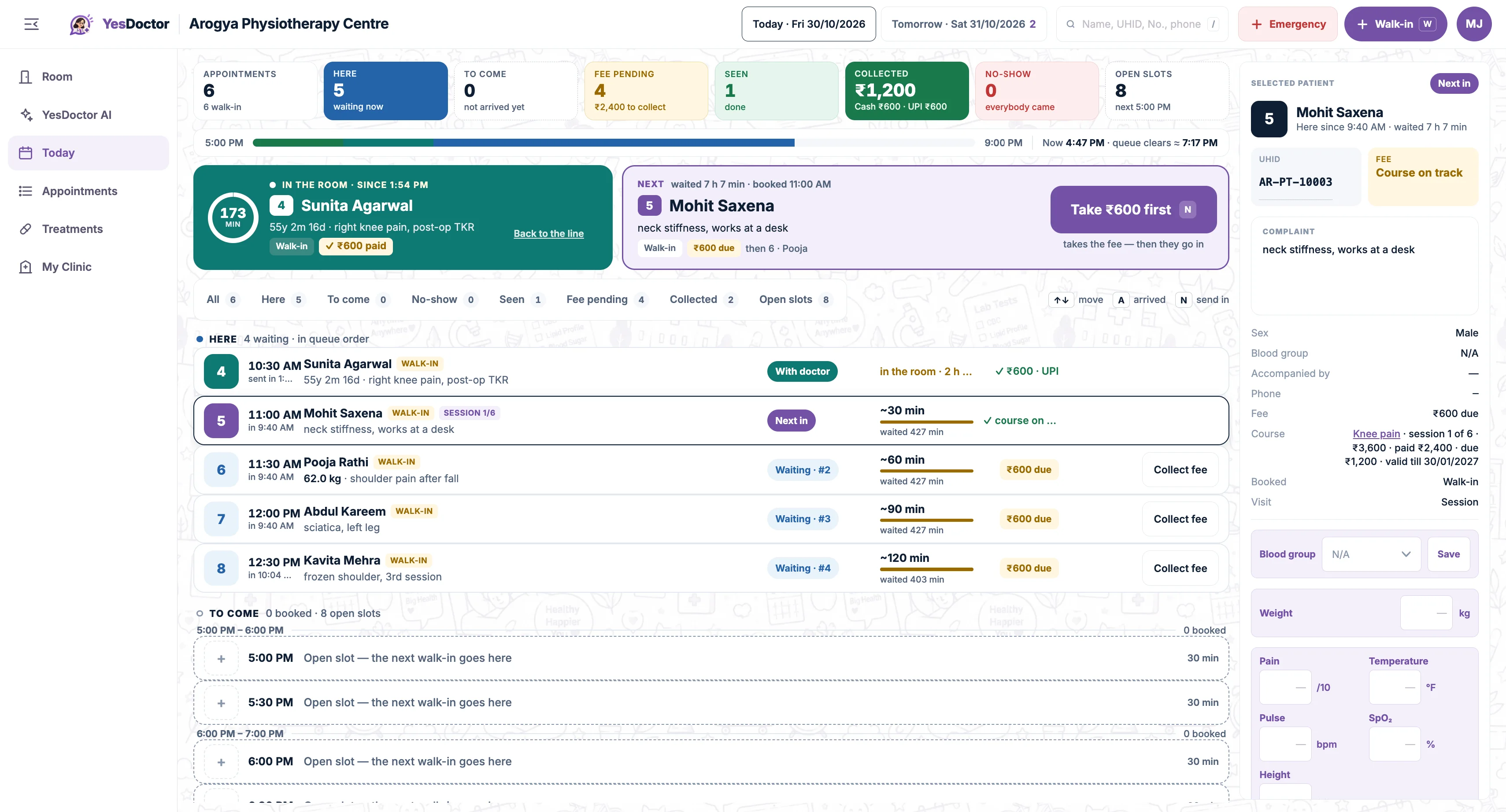
One Today screen shows who is here, who is next, who is in the room and how long the line will take. Walk-ins and emergencies drop straight in.
Fees at the desk
Collect cash or UPI before the patient goes in. Pending and collected totals update as the day runs.
Patient records and courses
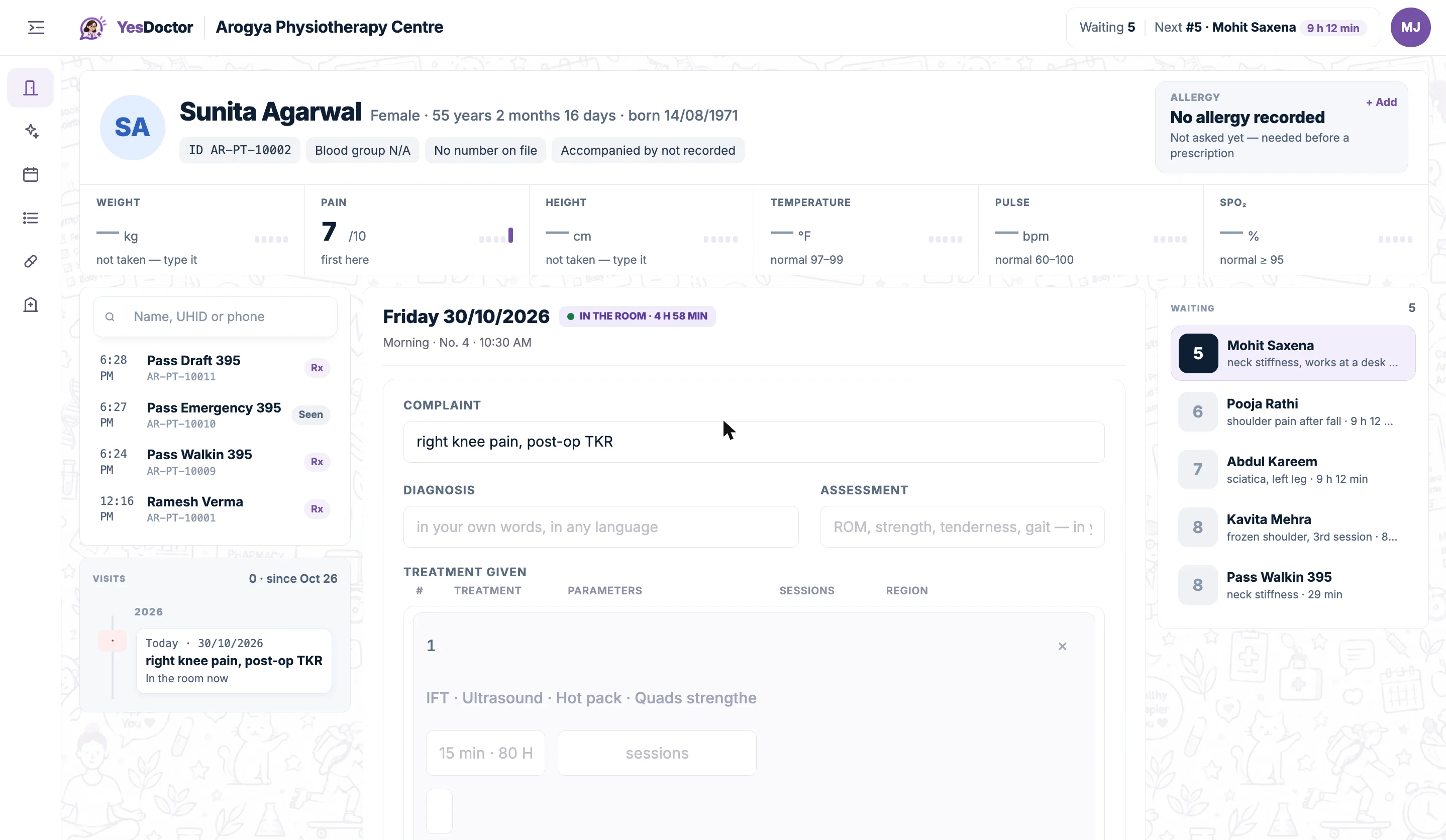
UHID, complaint, vitals, visit history and multi-session treatment courses stay with the patient for the next visit.
Medicines and pharmacy
A medicine or treatment master per clinic, and an optional pharmacy module for stock, purchases and sales.
Reports to the owner
Weekly and monthly figures by mail, so the owner sees the clinic without opening the app.
50 Clinics Run Their Day on YesDoctor
What changed at the front desk and in the doctor’s room, and what we learned building it with them.
How a clinic’s day changed
-
BeforeA register at the desk and a phone that never stops ringing with "how long?"
NowPatients book on WhatsApp, get a token, and their phone tells them when it is their turn.
-
BeforeFees chased at the end, cash and UPI reconciled from memory.
NowThe desk takes the fee before the patient goes in; cash and UPI totals update as the day runs.
-
BeforeNo-shows discovered when the slot is already empty.
NowReminders the evening before and three hours before; a freed slot is offered to the waitlist the same day.
-
BeforeThe doctor asks "what did I give last time?" and waits for the file.
NowVisit history, vitals and the treatment course are on the Room screen before the patient sits down.
-
BeforeThe owner knows how the month went when the accountant says so.
NowA weekly and monthly report by mail: visits, fees collected, no-shows prevented, recalls that came back.
What 50 clinics taught us
- 1 Walk-ins are the clinic, not the exception
In most of the 50 clinics the majority of a day is walk-ins. So the queue, not the appointment book, became the centre of the product.
- 2 Reception signs in with a code, not a password
Shared desks and staff turnover made passwords a support problem. A code to the clinic’s number ended it.
- 3 Hinglish is the language of booking
"kal shaam ko time milega?" has to just work. Rules handle the intent, the rest is deterministic, so nothing is booked by guesswork.
- 4 Doctors want memory, not advice
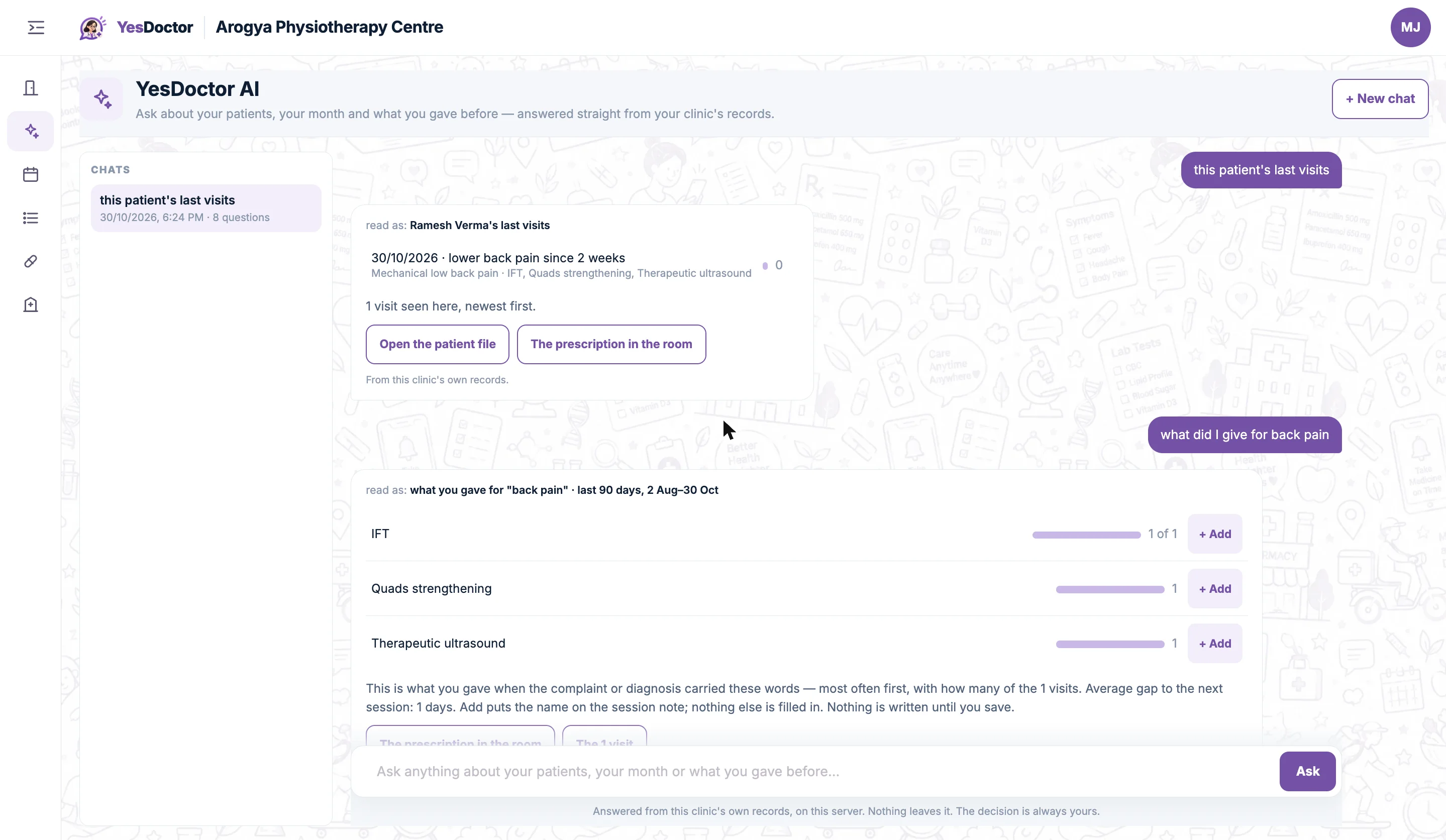
YesDoctor AI took off when it answered "what did I give for back pain" from the clinic’s own records and left the decision to the doctor.
Try YesDoctor
Fifty clinics already run their day on it. Set-up takes a call and an afternoon, and the first month is on us.